Monday, February 19, 2007

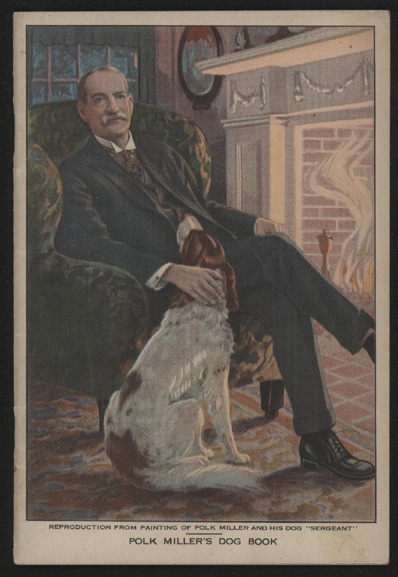
Polk Miller picture courtesy of Richmond, Virginia: Then and Now
glisten
The Old South Quartette - Pussy Cat Rag (Broadway 5031, 1928)
Polk Miller and The Old South Quartette - Rise and Shine (Edison + Edison Germany, Standard 10333; 1909)
Polk Miller and The Old South Quartette - Old Time Religion (Edison + Edison Germany, Standard 10332; 1909)
The Old South Quartette - Bohunkus and Josephus (aka Tobias and Keechungus) (Broadway 5031, 1928)
=================================================================
"Who the hell are Polk Miller and His Old South Quartette?" - Robert Christgau
One of the benefits of growing up with a music historian as a father is that I was exposed as a stripling to a wealth of music that would otherwise (until the relatively young age of the Internet) be utterly out of reach. I listened to many songs for many years at a tender age that, secreted away by scarcity and lack of public interest, I have never yet heard again since I moved out of the family home. It is with great excitement that I discovered, perhaps some twenty years after my last listening, Ken Flaherty's reissue of the complete works of Polk Miller and The Old South Quartette, 'Music of The Old South'. The disc is a remarkable time capsule of fine Southern gospel, ragtime and proto-blues from the birth of recording, but it is the story of Polk Miller, how these songs came to be recorded and the history of The Old South Quartette that compels me to post this music today.
Polk Miller was born on a Virginia plantation in 1844 to a wealthy, slave-owning family. As a child, he learned to play the banjo from slaves and immediately began amassing a collection of black vernacular music to add to his playing repertoire. Polk was something of a prodigy whose skill at mimicry and performance was noteworthy even at a young age; an pre-Civil War diary account from adjoining Augusta County (found at the Virginia Valley Digital Archives) holds a sixteen year Miller up as an exemplar, stating that another white imitator's "beaming face and banjo music and 'darkey' songs could not be excelled by Polk Miller himself." Miller's willingness to embrace certain readily available elements of black American culture apparently set him apart from other, less artful imitators of the time; his ability to vocally and musically blend into a black band is evident in the extant recordings.
Miller joined the Confederate Army during wartime and served as an artillery private. After the war, he founded a pharmacy in Richmond and went on to create a successful company devoted to nostrums and remedies for domestic animals which he named Sergeant, after his hunting dog, Sergeant (Sergeant's continues on today as a popular pet food and medicine corporation, though they're understandably cagey about Miller's Confederate background). Late in his middle age, Polk was a respected Southern gentleman and a prominent businessman, but a restless interest in entertaining would not quit him. In 1892, Polk handed off control of his business to his son and took to the road to began performing full time, exhibiting an act comprised of banjo picking, singing and the revisionist rose-colored retelling of an Antebellum Eden.
The liner notes to Flaherty's reissue CD tell the story of these stage exploits and Miller's intentions better than I can; hereafter follows an edited excerpt:
During the 1890's Miller performed alone, appearing at reunions, business conventions, literary association meetings... He often gave benefits for Confederate benevolent organizations and monument committees. Miller recreated the black slave characters of his nostalgic youth with banjo tunes, dialect stories and lecture, without resorting to farce or blackface make-up... (his) stage presentation was too sincere for minstrelsy and too rich in music to be considered a lecture. (Miller was) quoted in the Greensboro, Georgia Herald-Journal: "If there was anything that my mother used to whip me for when I was a boy, it was for talking like a nigger and I haven't quit talking like him yet."Apparently, Miller's drive for what he likely saw as authenticity forced him to recognize that a solo act could only replicate a limited amount of the black vernacular musical catalogue. Somewhere between 1899 and 1903, Miller took the surprising step of hiring a black vocal quartet to perform onstage with him; creating what may have been the first integrated touring production of the 1900's dedicated to the performance of black music. The addition of the singers, dubbed by Miller as 'The Old South Quartette', was well received critically; again, from the reissue's notes:
Miller saw himself as an apologist for slavery. In his lecture he avowed: "It has been my aim to vindicate the slave-holding class against the charge of cruelty and inhumanity to the Negro of the old time". Miller was quoted... in a detailed review that appeared in The Atlanta Constitution: "There is no more comparison between the 'Sarvant Marster,' [sic] ever gentle, ever faithful, ever true, contented and happy old Virginia plantation Negro and the impudent, loud-mouthed, discontented, head educated and heart neglected young Negro of today than there is between the high-toned, honorable refined gentleman and public citizen Chauncey M Depew and the brazen-faced coarse blackguard and public nuisance, John L. Sullivan..."
When Miller made his pronouncements, neither his language or his philosophy was outside of the mainstream. Racial stereotyping and racist slang were commonly used in mainstream American newspapers and magazines. While Miller was touring the southern states, delivering this deprecating, dehumanizing message, the lynching of blacks in the South reached epidemic proportions; a lynching was taking place roughly every second day."
A review in the Bristol, Tennessee Courier offered...favorable assessment: "They look like field hands and sing like Carusos. Their music is like nothing else on the platform, for they sing the old songs as the old time Negro sang before the War and not like Negroes trying to demonstrate how much like white folks Negroes can sing".In 1909, Miller and The O.S.Q. recorded seven 'sides' (though cylinders don't technically have sides) for Edison Records. Miller appears to have been something more of a special guest on these cuts than a leader; he sings on only four tracks and is clearly willing to allow the quartet the bulk of the attention. These cylinders apparently sold quite well but are most noteworthy as historic milestones; as the CD reissue's liners point out, "few if any biracial vocal recordings of comparable American vernacular music were heard again until the rock and roll era."
Extant documentation provides depressingly little information about the members of Polk Miller's quartet or insight into Miller's treatment of them. Miller claimed to have employed, "about twenty men in all, I reckon, since I first began to use a Negro quartette... I never discharged one of them for a fault, but they had to give up for other reasons," such as illness and "throat trouble." "It was always troublesome to break in new men, but if a Negro had any music in him - and the most of them have - it didn't take them long to catch on."
Racist times would call to an end for this sort of lop-sided camaraderie. In 1912, Miller disbanded the O.S.Q., citing audience resistance and harassment in a Richmond Journal newspaper article:
There is a deep seated, cruel and foolish prejudice in the North... a thing which I have never been able to account for (since they brought troubles upon both the whites and blacks in the South), against the Negro as a race of people. Perhaps the "bad nigger" that left here for the good of his country and went North is responsible for it all, but they visit upon the entire Negro race the hatred which we have only for the bad ones. Some of the Northern towns which wanted me would write, "We are exceedingly anxious to have you, but our people don't want The Quartette, as our people do not like Negroes..."For the following year, Miller continued to perform his act with another accompanist: a white Confederate veteran named Tom Booker. Booker was a banjo player and friend of Miller's; together they toured for a short while with a similar program to the one Polk performed with The Old South Quartette under the name 'Two Old Confederates'. Polk Miller died in 1913 and was buried at Hollywood Cemetery.
There is a certain class of whites in the South, whose ancestors never owned Negroes and who never enjoyed as I did the kind ministrations of the old Negro mammies and Uncle Toms of Antebellum days. This class of people made it very uncomfortable for my Negroes. My solicitude for the comfort of my men, and many times for the safety of them in going from the halls to their quarters, worried me very much and unfitted me for my work... this fact, with the inborn dislike of the Negro on the part of the hoodlum element, intensified my troubles when on the road and in some places I had to call on the Police force to guard my men.
No written record of what became of The Old South Quartette has been discovered, but in 1928, a band of the same name reappeared in a studio in Long Island to record seven more sides on the QRS label. While neither the names of the "twenty men" who comprised the original Quartette nor the '28 incarnation are known, pictures of both groups and the unmistakable similarity of sound suggest that, even though almost two decades had passed since their last recording session, some of the same members and/or management connect the two groups. No documentation remains to suggest that the group toured. They would never record under The Old South Quartette name again.
Ultimately, what are we to make of Polk Miller? He attempted to popularize and legitimize black vernacular music decades before it was acceptable to do so, but he also openly longed for the days of slavery. To the best of his ability, Polk tried to bring black culture before white audiences as honestly as he could, but all of his efforts are badly marred in the contemporary eye by dint of his unmistakable paternalistic racism. Miller toured with a black band at a time when associating with blacks as contemporaries was potentially punishable by beating or hanging, but he seems to have viewed them (at least in public) as interchangeable inferiors. Miller is a difficult man to understand by today's standards and his legacy is not simply summed up. I can only suggest you listen to the songs I have posted today and try to enjoy the music without prejudice. It is a sentiment that both Polk Miller and the regrettably anonymous members of the Old South Quartette would undoubtedly have hoped for.

The gentleman above is a member of the 1928 iteration of The Old South Quartette.
His name is unknown.
Photo courtesy of Virginia Commonwealth University Library Digital Collection
about the music on the page...
Two of the songs from today's post hail from the 1909 recordings: 'Rise and Shine' and 'The Old Time Religion'. Miller sings lead on both tracks; 'Rise' also features his excellent banjo accompaniment. 'Rise and Shine' is performed here as a bouncy, upbeat spiritual; 'Old Time Religion' is sung entirely a capella and is a more nuanced and deeply moving take on the gospel classic.
The two tracks taken from the 1928 Old South Quartette recordings are joyous musical novelties. 'Bohunkus and Josephus', set to the tune of 'Auld Lang Syne', is a silly anecdote told in call and response that neatly showcases the band's considerable skill at choral harmony.
Of the four of these, 'Pussy Cat Rag' is the one that still speaks to me most, both now and back when I first heard it as a child. The Quartette's minimal guitar accompaniment buoys up their astonishing vocal theatrics; also note the song's almost imperceptible but rousing tempo increase. 'Pussy Cat Rag' is a meowing, barking train with a now-and-forever place in my favorite songs of all time.

Cover of a tobacco tin, circa early 1900's
Picture courtesy of Banjo On My Knee, an excellent resource for all things banjo
The liner notes I've extensively quoted from above come from the pen of my father, ethnomusicologist and occasional Tofu Hut contributor Doug Seroff. Pops and his writing partner Lynn Abbott have just published their second book on the history of black American music, Ragged But Right: Black Traveling Shows, 'Coon Songs,' and the Dark Pathway to Blues and Jazz. The volume boasts a gorgeous cover, designed by fellow ragtime-geek Chris Ware.
I was lucky enough to see galleys of 'Ragged' and found it to be a compelling and fascinating read. The bulk of the research for this book comes from literally years of poring over microfiche prints of turn-of-the-century black newspapers such as The Indianapolis Freeman and The Chicago Defender. It's work that has simply not been done before and it yields a bountiful trove of untold stories about the history of (to quote the introduction) "musical comedy productions, band and minstrel companies in the circus sideshow annex and itinerant tented minstrel shows" at the birth of the twentieth century. Over the course of 350+ pages, 'Ragged' painstakingly details how a generation of forgotten black artists set the stage for the birth of modern American music. The work is lavishly illustrated with hundreds of exceedingly rare illustrations and photos, most of them out of print or unpublished until now.
'Ragged But Right' is available on Amazon at the prohibitive academic price of 75 bucks, but I would strongly recommend it as a necessary read and an unprecedented exploration of overlooked musical history to librarians, anyone with deep pockets and a love for a moving story and any folks who make their living in music industry or criticism; I guarantee that you will come away with a completely new understanding on the role and meaning of minstrelsy.
tell me more about it...
Buy the wonderful new Polk Miller and The Old Southern Quartette collection, direct from Ken Flaherty.
A Lucullan feast for the eyes and the ears, the disc comes sumptuously packaged in a 78 shaped (die cut with spindle hole!), heavy-stock paper, twenty-five page booklet peppered liberally with pictures and documents culled from Miller's own scrapbooks, analysis of the music and a lengthy, heavily annotated essay about Miller and The O.S.Q., finished with a lovely parchment belly band.
The disc itself includes the band's complete recorded output (both with Miller and from the 1928 session) in amazingly crisp and clean transfers; no small feat when you bear in mind that high quality copies of these recordings are at a premium. As if that weren't enough, Flaherty has also overseen the digital remastering of the entirety of the '09 sessions and added these seven cleaned-up tracks as a bonus on the tail end of the album. The clarity of these remasters is a wonder; unburdened by surface noise and hiss, you can really appreciate the artistry of the performances. For comparison's sake, compare the remastered version of 'Rise and Shine' that I have posted above with an unremastered version of the same song. I think you'll agree that the improvement is impressive.
At the moment, the disc and its accompanying book are available ONLY directly through Ken. A burp on Google's part ("polk miller" doesn't lead to "polkmiller") makes it difficult to find the reissue through the common search methods; if you find yourself enjoying this music, help bring some attention to this labor of love by lighting the off ramp to his door and driving some web traffic his way with a link or two.
-
Itunes, eMusic and Amazon have little or nothing to offer from Polk Miller, but if you happen to have a gramophone around the house you may want to bid on this original Edison Cylinder of 'Laughing Song'.
Ebay also lists a 1929 edition of Polk Miller's Dog Care book, with a cover comprised of this fantastic portrait of Polk with his loyal pooch.
-
Edison cylinders, for all their scratchy sound and anachronistic content, do have one very good thing in their favor: they're all in the public domain. That means that, obscure as Polk and The O.S.Q are, most of the band's recorded music is thankfully available via Internet archives.
You can listen to and download mp3s of five of Polk Miller and The O.S.Q's songs thanks to The Cylinder Preservation and Digitization Project at The University of CA, Santa Barbara .
Some of this music deserves a bit of commentary and linkage:
- 'The Bonnie Blue Flag' is an odd bit of lasting ephemera; it may be the most complete extant recorded version of the unofficial Confederate anthem performed by a Confederate veteran... backed by a black vocal quartet, no less! You can also download a healthy handful of other Civil War nostalgia cylinder recordings here, courtesy of The Missouri Civil War Museum.
- 'Laughing Song' (aka 'Oysters and Wine at 2AM') is part of an eponymous tradition of non sequitur-laden songs whose chorus is comprised of laughter. Here's a bit of spirited discussion about laughing songs over at The Mudcat Cafe and a memorable sheet music cover for a laughing song by recording pioneer George W. Johnson. Just for good measure, I'll throw in a collection of laughing songs from Archive.org and a video of a contemporary Chinese laughing song by the Malaysian pop group Four Golden Princess.
- 'The Watermelon Party' is a "coon song", a once popular genre with an ugly nomenclature taken from the million-selling turn-of-the-century phenomenon 'All Coons Look Alike To Me' by Ernest Hogan. Mark Twain, a fan and vocal proponent of Miller's work, singled out this song for particular praise, saying "I think that Polk Miller and his wonderful four is about the only thing the country can furnish that is originally and utterly American. Possibly it can furnish something more enjoyable , but I must doubt it until I forget that musical earthquake, 'The Watermelon Party'."
The Document Records reissue of Polk Miller and The O.S.Q's collected works is out-of-print in America but the label's UK site offers a pair of Old Southern Quartette tracks for download: 'Oh What He's Done For Me' and a musical take on the the Paul Laurence Dunbar poem 'When De Corn Pone's Hot'.
-
Here's a contemporary take on Miller: Jerusalem Mournin', all Moby'd out.
-
Download a .pdf of a beautifully preserved program from Polk Miller's touring show, one of the many historical documents reproduced in its entirety in the Flaherty reissue.
-
Read a brief, informative essay on Polk Miller and The O.S.Q. from Victrola and 78 Journal by music journalist Jas Obrecht.
-
Read a lengthy example of Polk's somewhat vile pre-Emancipation nostalgia, quoted within a lengthy and didactic 1899 memorial for a Richmond doctor.
-
Historian Tim Brooks' book Lost Sounds: Blacks and the Birth of the Recording Industry, 1890-1919 features a full chapter devoted to Polk Miller and his accompanying, Grammy-winning two CD-set includes a Miller/O.S.Q track.
-
The Edison Speaking Phonograph Company Myspace offers 19th century wonders on 21st century stationery.
-
A Tofu Tip of th' Hat to Locust Street and an especially deep bow to Tinfoil, who helped with the remaster of the original cylinders for Ken Flaherty's project.
Tinfoil is a must to explore for anyone with an ear for the sepia tone; in addition to a considerable archive of free music and loads of information, essays and vintage illustrations, they also sell reasonably priced 24-track year-by-year cylinder CD compiliations.
sorry to have been away last week
Doing research and writing this post ended up requiring a lot more thought and time than I originally budgeted. I should be back on my self-enforced "at-least-once-a-week" schedule from here on in.
Given the sweat I put in on this sucker, any comment on it would be greatly appreciated.
Labels: favorites, music, old timey
Wednesday, May 03, 2006

decades later, after the accident
=================================================================
glisten - Lucky 13 Pt. 4: Percy Mayfield
#7: Percy Mayfield - Sugar Mama, Peachy Papa
#8: Percy Mayfield - The Voice Within
Talk about a hard row to hoe, Percy Mayfield sure had one. At thirty, Percy fought his way to the top of the hill with a self-penned number one R+B single, 'Please Send Me Someone To Love'. His movie-star looks and songwriting chops put him in the running to become one of the first great pop stars of the fifties but two years later, Mayfield gets in a horrendous car crash that terribly and irrevocably disfigures him.
He spends months recovering, writing and, finally, touring again. Mayfield spends the next seven years on the road, fighting depression and alcoholism. His songwriting had always focussed on a dark inner life (Percy's first published singles included 'Two Years of Torture' and 'Life Is Suicide') and the fallout from his accident fuels a number of macabre blues ballads that would become standards, among them 'Stranger in My Own Town' and 'The River's Invitation'.
By 1961, Mayfield has pinballed from Specialty to Chess to Imperial and appears to have reached the end of his career when he sells a song to Ray Charles titled 'Hit the Road Jack'. The tune is a massive jackpot and, knowing a good thing when he hears one, Ray signs Mayfield to his newly formed Tangerine label. Mayfield stays with Tangerine to the end of the sixties, but eventually moves on to write tracks for RCA Victor until the mid seventies, when he effectively retires. In 1984, not yet sixty-five, Mayfield passes away.
The two tracks I have up today showcase Mayfield's intensity, virtuosity and versatility as both a songwriter and a performer.
'Sugar Mama, Peachy Papa', Mayfield's duet with obscure rnb singer Joy Hamilton, is a pop gem; bouncy and sweet as molasses. Frothy and full of nonsensical scatting, it's a wonderfully syncopated call and response, uptempo swinging sunshine that's utterly frown-proof.
'The Voice Within,' on the other hand, gives a look into Mayfield's harsh inner world. Essentially a schizophrenic interior argument for suicide, 'Voice' is driven by buzzing demonic saxophones, death-march drums and a skeletal, tripping piano line. It's less a blues and more a malaise. Both songs are amazing listens and memorable melodies; if this is your first time meeting Mr. Mayfield, I imagine you'll be hungry for more.
tell me more about it...
Both of these tracks hail from 'Memory Pain' the second volume of the outstanding two disc Percy Mayfield best of. You can buy the discs from Amazon for fifteen bucks a pop or from Oldies.com for a few dollars less.
If you'd rather download, both iTunes and eMusic have the greatest hits; neither, unfortunately, has the gorgeous Rhino handmade Tangerine/Atlantic set that tracks Percy's later and equally impressive work. The disc is long out of print and starts at the usurious price of a hundred bucks on Amazon.
-
Read this bio.
=================================================================
spiffy
Kim Cooper and Nathan Marsak run an occasional LA bus tour that explores some of the darker spots of Los Angeles' criminal history. Over the course of 2005, Kim and Nathan have taken their interests online, obsessively blogging the police blotters and local dustups and murders of 1947 L.A..
Recently, they've started a new project with the same bent, only they've dialed the wayback machine this time to 1907.
Lots of great newspaper clips and plenty of film clips as well; it's a clear porthole to an earlier, equally complicated time.
-
King Hippo, we hardly knew ye.
-
I'm sure all you 1337 kids already know how to save youtube and googlevideo movies as mpegs, so I won't even bother telling you.
-
I strongly support drawing on things. Just not on people.
That kind of thing leads to Mr. Cool Ice.
Apparently, he had a T-shirt company design the tat in Corel Draw. Arial Black is forever, I guess.
-
The last statements of everyone executed in Texas since 1982.
All three hundred and sixty two of them.
-
"showPAN's Sharezo No. 1 in b min, op. 20 ".
-
All kinds of cool and geeky print for sale at fairly reasonable prices from Nucleus Gallery in California.
Your tastes may vary; look around the page a bit as there's flavor variation throughout.
-
Last I heard, there was no more limbo; which is probably for the best, all things considered.
Labels: clicky, favorites, Lucky 13, music
Monday, March 27, 2006

=================================================================
glisten: Blue Eyes Meets Bed Stuy
Notorious BIG vs Frank Sinatra - "Nasty Boy / For Every Woman There's a Man"
Notorious BIG vs Frank Sinatra - "Come On / My Way of Life"
How late to the game am I in talking up the DJ Cappel + Smitty Blue Eyes Meets Bed Stuy Sinatra/Biggie mash-up? It's already seen ink in Time Magazine, on MTV and in a nearly month old MSNBC feature. When "old media" has already beaten me to the punch for coverage on something you can only buy online or at the street corner, you have to assume it's played out... but stay patient with me. I'm primarily showcasing tracks from this quality mix because they're good listening, but they're also here as an excuse to discuss a pretty amazing turn of events: the criminalization of Ready to Die.
Some background for my non-hiphop heads: Ready to Die was the '94 debut album from Christopher Wallace aka Frank White aka Biggie Smalls aka The Notorious BIG. The disc was released by Puff Daddy's Bad Boy Arista imprint and was a tremendous critical and financial success, eventually selling over three million copies and winning the hearts of an entire generation of East Coast B-Boys. Ready to Die is generally considered a touchstone of modern hip hop, one of the great albums of the decade and of the genre. You could give it a listen and decide for yourself, except you won't be able to legally purchase a copy.
This is the aftermath of a recent Nashville federal court case, wherein the rapacious owners of Bridgeport Music and Westbound Records (they have a history of litigation against both companies and artists, including Papa Clinton, over the use of unauthorized samples) went after Big Boy in a big way. The prosecution was able to conclusively prove that Ready to Die's title track lifts a complete and uncleared sample from the Bridgeport/Westbound owned '71 Ohio Players' cut 'Singing in the Morning'. You can hear samples of the Biggie and Ohio Players tracks here to get an idea of just how little of the Players' footprint remains.
The court sided with Bridgeport/Westbound and, in addition to awarding over four million in damages (to the company, certainly NOT to the band), ordered all physical and digital copies of Ready to Die (not the SINGLE, mind you; the WHOLE ALBUM) impounded and removed from radio airplay. At the moment, no chain will sell you a physical copy and you won't be able to find it online either; both Amazon and iTunes have recast the disc as vaporware. This effectively renders it banned art on a par with Negativland's infamous U2 LP. Puffy is, of course, appealing the decision. Litigation on the case will likely go on for several years and (I imagine) end with the redistribution of a revamped version of the album with the offending samples removed; but for the moment, here we are in 2006 America with a multi-platinum album being yanked from the shelves and censored by the Feds.
The ruling brings up all sorts of cloud cuckooland questions in my mind: with sales of Ready to Die suspended, is it now legal to give away copies? Could you really be busted for playing a Ready to Die track on the radio, even if it's not one that contains uncleared samples? What sort of penalties would be appropriate? Is spinning 'Gimme the Loot' at a club illegal? And what if you issued a remixed version of Ready to Die for the streets? Is THAT album illegal to sell or play on the airwaves by virtue of its tainted heritage? Where does this nonsense end?
For now, it ends for me with Blue Eyes Meets Bed Stuy: illegal art MADE from illegal art. As Chuck D (no stranger to sampling woes on both sides of the table himself) points out in a recent NPR piece on the court decision, "the incestuous mess" of current copyright law leads to "downloading running rampant; bootlegging will run rampant. Because people say, 'You know what? It doesn't even pay to go through the channels, so we're going to create almost a bastard industry... that moves quicker than legality".
Here is some of the fruit of that "bastard industry," two tracks that don't sample from Ready to Die (though much of 'BEmBS' does) but that do afford a glimpse into a pop music future far superior and more creative than what, say, the industry would have us listen to.
'Nasty Boy / For Every Man There's a Woman' is a coy repackaging of Biggie's catchy and misogynistic fuck anthem with a badass beat that's far superior to the original, a muted trumpet/trombone/flute flourish for body and a perfectly sardonic Frank crooning "Wise men know, it was ever so: woman was made for man".
'Come On / My Way of Life' succeeds more as a mash-up; elements from both songs color each other so completely that it's near impossible to tell where one starts and the other ends. Both of these certainly will appeal more to fans of Biggie than Frankie, but I daresay it's worth the download no matter where your allegiances lie.
tell me more about it...
Buy Blue Eyes Meets Bed Stuy from online purveyors of all things beat and vinyl, Sandbox, for 13 bucks postage paid.
Alternately, drop a direct line to DJ Smitty in person at BlueEyesMeetsBedstuy@hotmail.com and see if th' fella can sell you a copy from his personal stash at a better rate.
Tell him th' Hut sent you.
-
Listen to the 'Juicy / New York, NY' mash from the BEmBS myspace page.
-
Visit the official site of DJ Cappel, a fairly comprehensive guide to the works of Frank Sinatra and the leading Biggie fansite.
-
Asking bloggers and journalists to comment on the cultural relevancy / relative quality of projects like this is throwing chum to sharks; so there's plenty of contentious ink to choose from if you wanna read more about it. You might start with this somewhat sniffy review from The House of Ionesco; the infamous Byron Crawford's take (he's got mixed feelings) or this thought piece from CBC.
-
Those in the mood to try a bit more mashin' can check out DJ Ayres and company over at The Rub, where you can grab little gems like these Marvin Gaye / Ying Yang and R. Kelly / Mixalot mix-ups.
=================================================================
spiffy
At forty five bucks and up for a single ticket to a ninety minute show, it's frankly amazing to me that The Moscow Cat circus has done so amazingly well.
Honestly, I'd still love to go. Really, who could front on the thrill of cats on a ball?
-
The Royal Art Lodge's online gallery is chockablock with beautiful work.
-
Presumably, Apple is not a participant or sponsor of the war in Iraq either.
-
Lil' Markie 4EVA
-
Rhino Records recently sent along a few discs from the new Talking Heads dualdisc reissue set and, as usual with Rhino, you've got to be impressed with the love and time they spend spitpolishing the old material. These ol' classics are nicely improved with the inclusion of a number of outtakes, acoustic renditions and bonus tracks on the CD side and with a handful of bootleg-till-now performance videos on the DVD side. Talking Heads fans should be pleased; it's the best excuse to return to this particular well that they're likely to have this decade.
-
Bubblegum Fink is an essential blur of pomo pop effluvia, oddball music and Big Daddy Roth culture. Lovin' that blogroll, too!
-
Tofu + Music = A Good Idea in Any Language
-
"Him shine di light pon mi an' look. When him see it seh a mi real hair him frighten an' seh mi mus come check him a di station di following morning. When mi go him shake mi han' an' seh mi have talent an' mi fi keep it up," he said.
-
Any time is a good time for Jerry Time.
-
A letter from my inbox:
My name is Ian Cho and i'm an 19-year old Australian electronica artist. To be blunt, would it be possible for you to include a link to one of my songs on Tofu Hut? My record label has put up a free legal mp3 download of one of my album tracks. I would be honoured if you would have a quick listen to it. Well, this is an strange email for me, but nonetheless i hope you enjoy the music.
The track turns out to be a pleasant wash of electronic ambient and radio signal squigglies that I can recommend as a Monday bonus track.
Give it a try here:
Ian Cho - The Flying Fish
=================================================================
blah blah blah
I've gotten myself into the position of doing occasional hackwork for Stylus; mostly to keep me plugged into what's what on the worldwidepop airwaves.
Here's my most recent dose of weekly snarkiness, along with corporate sponsored links where you can either hear the music or see the video and make up your own mind.
Mali's Amadou & Mariam - Coulibaly
Amadou and Mariam are a pair of blind musicians from Mali; he plays the guitar, Mariam sings. Just to up the unlikely quotient, they're also married; the only married, two-member band _I_ can think of off-hand is the long-gone Butterbeans and Susie but a BLIND, married two-member band? That's this funky? To be fair, a great deal of the funk has to be chalked up to the presence of Manu Chao, the famed French producer/performer/svengali. Manu's fingerprints are all over most of A+M's new album, notably on their first single 'Senegal Fast Food' and on 'Coulibaly,' a grooving and immenently danceable tune. 'Coulibaly' is a real joy to listen to and accessible to just about any audience you could think of.
Australia's Rogue Traders - Watching You
It is the melody of a botched lobotomy; a lightly considered nth degree retread of 'My Sharona' that features the (perhaps ironic?) lyric "I need a little edge with my electro-pop". It is not stupid enough to be fun; it takes a quarter-century old guitar riff and adds NOTHING to it and, worst of all, it's boring. There are songs in this world that are good, songs that are alright, songs that are so bad that they're good and songs that are simply, flat-out bad. This isn't worse than that godawful Embrace track you Stylus folks made me listen to earlier, but damn if it isn't close.
France's Nadiya - Tous Ces Mots
Holy Bejesus; this is my guilty pleasure of the year right here! Eighties as fuck, 'Tous Ces Mots' is a velveetastic Godzilla powered cocktail of 'Eye of the Tiger', mindless Redman-wannabe rap breaks, a clap track that won't take no for an answer, splashy hi-hats, squealing tires and a wash of paint-by-numbers synths straight out of a John Hughes movie. It is SO good; it makes me feel like I'm racing down Broadway in a supercharged '78 Chevy Nova with a trio of topless supermodels while we all do X, chug Jack Daniels out of the bottle and power-scarf pints of Ben and Jerry's. There are also video games involved in there, somewhere. I am not being facetious. This is what I want out of music. This is what I want out of life. I WANNA BREAK! DOWN!
America's Rihanna - SOS
Take note all you would-be Rogue Traders: THIS is how you remake a pop hit. Three degrees of separation from the original, Rihanna's take on 'Tainted Love' is based more on a dancehall remake of the Soft Cell song than of the actual track, a meta-move that's quickly seen and trumped by a 'Tiny Dancer' reference tossed off in the first verse. It's all very repetitive, very formulaic and catchy as hell. I'll admit, I was pretty sure Rihanna was a dry up and blow away one hit wonder but this sounds destined to eat up the US pop charts. I suppose this is why Jigga runs Def Jam and I write one-paragraph reviews of sonic effluvia for free.
Australia's Keith Urban - Tonight I Wanna Cry
So it's emo-country now, is it? This Brokeback ballad is innocuous and sweet enough without being cloying and gets a few points for sneaking in the phrase "I though that being strong meant never losing your self control, but I'm just drunk enough..." Meanwhile, this schmuck is sleeping with Nicole Kidman, but whatever; if we simply MUST have a reworked version of 'Wind Beneath My Wings' for the gunrack crowd, I'm happy that it's one that manages to be both credible and gentle enough to not burn on the way back up.
Labels: clicky, favorites, music, stylus
Monday, March 20, 2006

The Queen of Xhosa Music provides bitchin' desktop wallpaper
=================================================================
glisten: Madosini Manquina aka Latozi Mpahlele
Madosini - Sphetukano / Uxam Ulilela Abantwana Bakhe / Weny Se Goli
Madosini - Bafazi
I was in college when I happened upon a mixtape of traditional Xhosa music. Most of the tape was comprised of the astonishing Madlamini and Her Witchdoctors' 1980 Sounds of the Transkei album, a collection of songs from the gorgeous, otherworldly Zulu vocal choir that is both out of print and unjustifiably MIA on the internet.
As obscure as that Transkei album is, the last ten minutes of that beloved mix were even moreso: labeled only 'Madosini - Mouthbow - Four Songs' the end of the tape was unlike anything I've ever heard before or since. The type of instrument playing on the recording was impossible for me to place; the sound was tinny and wheedling, like a combination of a flute and a musical saw. The mystery instrument somehow produced oddly ethereal overtones, not unlike Mongolian or Tuvan throat singing. The strange thrum of the buzzing strings mimicked the pop and hiss of surface noise on a record, a sound I've always found warm and lulling. The singer's voice had many of the same qualities; she was authoritative but gentle, a balance of rough directness and elegant delicacy.
Several years later, while transferring the tape to CD, I found myself again transported by this amazing music and decided to investigate further. Madosini turns out to be the acknowledged master of a number of indigenous Xhosa instruments: the isitolotolo (a variety of wooden Jew's harp), the uhadi and the umhrubhe.
The umhrubhe was the instrument that had so perplexed me on first listen; it is played with a bow like an upright bass, but the upper half of the umhrubhe is held in the mouth. The musician changes the sound by bending the umhrubhe while increasing pressure with the bow or by plucking the strings. The ghostly overtones are created by widening or narrowing the resonant chamber of one's mouth while whistling and bowing the string. It's a complicated performance technique and one that, again, evokes that of a Tuvan traditional instrument: the mouth bow known as the 'ca'.
Madosini has been playing these instruments since her teen years. Though at least pushing seventy (she's unsure of her exact birthdate), Madosini now records on the South African MELT label and continues to perform live, recently touring with the internationally acclaimed traditional Xhosa troupe Amampando and playing WOMAD in 2002. 2003 saw the release of the African documentary film Spirits of the Uhadi, in which Madosini meets with Thandiswa Mazwai, a young South African pop star who she befriends and teaches to perform the music of her ancestors.
Madosini takes her role as one of the few surviving Xhosa virtuosos quite seriously; the uhadi and umhrubhe are considered primitive and antiquated by many newly-Westernized contemporary Southern Africans but Madosini is determined not to see the instruments fade into obscurity. She does a considerable amount of community outreach and touring throughout Africa and Europe to both youth groups and public crowds to increase awareness of the rich tradition and still enchanting sound of traditional Xhosa music. As Madosini says, “When I play my instruments, the idea is to tell the people that without nature there is no life and without life there is no music. These are the foundation stones for humanity."
The music I have on the Hut today comes from a test-recording session with Madosini dating from 1987. All of these songs were later released in a much different form on Madosini's eponymous 2001 MELT album, but I don't believe that these particular recordings have ever been issued in any form. They find Madosini in excellent form; raw (I love the exclamation of breath as she clears her throat between songs), vibrant and powerful. The first mp3 track contains three songs: 'Sphetukano', 'Uxam Ulilela Abantwana Bakhe' and 'Weny Se Goli'; all three feature Madosini on vocals and the umhrubhe. The second track, 'Bafazi,' features Madosini on vocals and on the uhadi. I am under the impression that these songs are effectively originals, crafted from the natural hybrid of Madosini's own compositions and of the traditional themes of indigenous Xhosa music.
I hope you enjoy these four songs as much as I do; I've been listening to them for almost a decade and they still sound new to me.
tell me more about it...
A few sites that I found suggest that you can buy Madosini's work on iTunes, but I've only unearthed a pair of worldbeat mixes and a single solo track on that behemoth; if you'd really like to buy more Madosini (and, of course, I strongly recommend that you do), you can find an entire album on e-Music... and potentially for free!
Without coming off as too much of a shill, here's e-Music's offer: 50 free tracks as an introductory offer and if you don't like the service enough to stay on board, you keep the tracks and cancel with no repercussions. A GREAT way to take advantage of that offer would be to grab the Madosini and then DL, say, a very solid Ali Farke Toure album, an Amadou and Mariam best-of or a Miriam Makeba concert disc. You indie kids out there might prefer to fill out the fifty with the new Neko Case, Destroyer or Cat Power albums; whatever, it's a pretty nice deal and the terms of service, should you choose to stick with it for the long run, seem fairly reasonable as well.
Regardless of your opinion of e-Music, it's the ONLY place I can find Madosini for sale on the web without heavy import fees. If anybody else knows where we can get more of 'The Veteran's recorded work, please let me know; I know _I_ would jump at the chance to buy an American release.
-
Listen to this realaudio BBC piece on Madosini, featuring a live performance and an interview. The story of Madosini being stripped of her instruments at the airport (they seem to have thought they were bows of the weapon variety) and of her proving their use to customs officials is a jaw-dropper.
-
Respect due to the always essential Benn loxo du taccu, who blogged up Madosini over a year ago.
-
Listen to some realaudio samples of Xhosa instruments and choirs on this PBS page and read from this collected English translation of Xhosa folklore.
Caveat emptor on that folklore collection: the 'translator' is a colonial occupant from 1886 with something less than a full appreciation of the people whose stories he's committing to paper (he compares the tales in his preface to "the blocks of wood in the form of cubes with which European children amuse themselves"). Undoubtedly, these stories are colored more than somewhat in the retelling, but they're still pretty compelling; take a peek at the loopy Story of the Cannibal's Wonderful Bird.
-
The 2004 issue of Journal of the Musical Arts in Africa features an interview with Madosini about the technical process of playing and composing for the umrhubhe as well as the place of the instrument in the culture of the Xhosa people. You can order the magazine from the link above for about $45US or do what I'm doing and get thee to a library.
-
For a very technical explanation (spectrographic analysis, CoolEdit and M.C. Escher are invoked) of how the umhrubhe is played, how it produces overtones and how recording this music affects it's sound, have a go and read this sadly graphic-less but still fascinating essay on Xhosa music.
=================================================================
spiffy
The Lego Suicides
-
Tom Petty, Jeff Lynne and Prince playing 'While My Guitar Gently Weeps' at The Rock + Roll Hall of Fame
Yeah, yeah; I know: this starts out tremendously boring, but just wait till Prince comes on and KILLS it.
Youtube is, of course, super-great; also don't miss these wonders of Western civilization:
It's the Juggernaut... BITCH!
The Parlor
... and pretty much everything on this wonderful ILM rap video YouTube thread.
-
Free Wakeup calls from Maria Sharpova.
Start your day by telling A-Rod to fuck off.
-
Day late and a dollar short, but if you haven't seen the BBC tech-geek sitcom The IT Crowd yet, Encomium has links to the entire season's worth of shows.
If you were ever into Father Ted or The Young Ones, it's worth a look; goes without saying that it's way better than any American sitcoms.
-
John Kricfalusi's blog makes the internet worthwhile.
Seriously. The man is a god.
Labels: clicky, favorites, music
Monday, January 02, 2006

=================================================================
glisten: Bill Monroe
Our first foray into the new year focuses on Bill Monroe, one of the most important voices in bluegrass, a mainstay at the Grand Ole Opry and possibly the greatest mandolinist to ever lay hand to strings. Monroe had an incredibly long and fruitful career; much of his prodigious recording output is still readily available, making this virtuoso an excellent touchstone for anyone curious to learn more or acquire a taste for bluegrass music.
The following tracks hail from Monroe's first sessions as a solo artist on RCA/Victor; previously, he had always played with his brother Charlie as part of The Monroe Brothers, but Charlie and Bill ran afoul of one another around 1938 and split to create their own bands. Bill founded The Bluegrass Boys, one of the longest running and most influential combos in the genre, providing an early home for such luminaries as Earl Scruggs and Lester Flatt.
This 1940/1941 incarnation of the band features Clyde Moody on guitar and occasional vox, Tommy Magness on fiddle, Cousin Wilbur Wesbrooks on string bass and Monroe on vox and mandolin.
It should be noted that these cuts, while not exactly atypical of Monroe's general style, sounds to my ears to be a bit more raw than his later work; almost seventy years later, this remains amazingly vital and exciting music. Give 'em a try and then treat yourself to a few more when payday rolls around.
Bill Monroe - Six White Horses
It doesn't take much to hear something out of place on this track; the anachronistically rock'n'roll riff that provides the hook for 'Six White Horses' and "the sixteen coaches long" line would be lifted some fifteen years later to great effect by both Junior Parker and Elvis Presley for 'Mystery Train'.
Bill Monroe - Dog House Blues
What can I say? I'm a sucker for onomatopoeia songs.
Bill Monroe - In the Pines
Modern listeners will likely remember this as a track from the Nirvana Unplugged album, where it's credited as a cover of Leadbelly's 'Where Did You Sleep Last Night'. 'In the Pines' is a lot older than Leadbelly, though; it's a traditional arrangement that dates back to mid-nineteenth century Appalachia. Monroe's version, considered by many to be the definitive rendition, is awesome in its depth and intensity; it puts the 'blues' in bluegrass.
I got these tracks digitized from the original sides so you'll notice some surface noise, something I obviously don't mind... but if you can't afford the heavy coin that finding these on wax would run you, if you'd just like a cleaner dub or if you want to hear more of this very early material from the Don of the Mandolin, you can buy "The Father Of Bluegrass: Early Years 1940-47" from Amazon.
Twelve bucks nets you twelve tracks from the '40/'41 sessions plus a baker's dozen of other indispensibles. You can't beat that price with a stick.
2006 marks the ten year anniversary of Monroe's death; why not put in a good word to the USPS and see that this giant gets the back of his head lavished with mucilage and slapped onto postage?
Listen to a '93 recording of Monroe at the White Springs Florida Folk Festival performing 'Wayfaring Stranger'.
There's plenty of other nice cuts on this freebie disc that merit a DL, including music from Etta Baker and The Stanley Brothers.
Read this brief AMG bio of Monroe.
Uncle Bill's most famous song was likely 'Blue Moon of Kentucky'; you can hear the song, the Presley cover and the Monroe re-remake as part of this NPR story which denotes 'Blue Moon' as one of the one hundred most important musical works of the past century.
While you're on the NPR tip, give a listen to this NPR track about Bill's million dollar mandolin.
And if you ain't equipped to listen to realaudio, may I recommend...)
=================================================================
spiffy
Those of you who enjoyed my long-ago post of 'The Faggots Want Wine' should stop by Holtzclaw's MySpace page, for 'Hot Love Ball' if for nothing else.
On a similar note, you're also REQUIRED to go watch Travis 'n' Jonathan's take on Grizzly Man:
"This is Lemonberrygingersnap! He's a big bear!"
The fox gag near the end kills me.
120 Years of Electronic Musical Instruments but no electronic harmonica? Must not be fans of Astro Beat Circus, I guess.
K + K Mime are the founders of gospel mime.
HARDCORE GOSPEL MIME.
Heard the story about Owen the tsunami hippo and Mzee the tortoise?
They're cuuuuuuuuuuute.
Feelin' fourfour lately.
American ingenuity knows no bounds.
So you went and bought yourself a pod JUST before the new videopods hit, eh? It's cool; you can still get some funky frame-by-frame fun at ipodscrubs.
These oddball choose-your-own-adventure quicktime movie is creepier than creepy; more than a touch of Svankmeyer going on.
I've certainly taken a few bad driver's licenses in my time and I just find it cruel to put the screws to celebrities solely for looking and photographing as human.
Even so, c'mon. This is pretty classic.
=================================================================
Labels: clicky, favorites, music
Monday, December 05, 2005

"One commonly raised problem is ‘How could Noah fit all those huge dinosaurs on the Ark?’ "
=================================================================
glisten: the ark
The Ark - 'This Piece of Poetry Is Meant To Do Harm'
Two points to be made at the outset:
First, I'm not a fan of glam. Freddie Mercury is a mystery to me, Elton John is generally a turnoff and I spent a month trying Bowie with limited results. True, I do loves me my Hedwig, by and large I have a general aversion to draggish attitude-rock; unless it stands up and slaps me around, I'll take vanilla, thanks.
Secondly: I have a slutty penchant for discovering and falling in love with a band's sound, listening to them nonstop for weeks and then trumpeting them as the greatest band in history. This generally leads to burnout, happy memories and a somewhat more measured assessment of the artist's place in my personal hierarchy, but when you're top of my pops, yer my fave of all time.
That said, meet my new favorite band of all time: Swedish glam-rockers The Ark.
I was lucky enough to get a copy of the album about six hours before I saw them at Mercury Lounge and was instantly hooked. One of the things I like best about them is the effort they take to really CRAFT a song to have an instant efferct on the listener; there's a gorgeous balance between the wacked out metal moments and the quiet, ballad-y breaks. The songs are engineered to push your buttons and they succeed. Better than that, there's a refreshing lack of irony; despite the thick drizzle of glammy-cheese heartily drizzled over every hip-twitch and rock-yowl, there's never any "wink-wink-aren't-we-hip" self reference. It ain't Po-Mo and that's a blessing.
At the gig, I was completely won over. I jumped around like a dork and headbanged like I was back in high school. Frontman Ola Salo, the band's Adam-Ant lookalike and mega-charismatic frontman, is amazingly fun to watch strut and fret on the stage; at one point he straddled a front row fan's shoulders while singing their 2000 Swedish hit 'Let Your Body Decide' and piggyback-rode into the center of the crowd, still headbanging and commanding call and response on the chorus. His onstage patter was sharp, self-important and delightully fun; we were invited to sing the national anthem of The Ark, given a primer to the manic-depressive nature of the Swedes ("half the year it is totally dark and half the year it is very bright, so we are all completely crazy") and told not to expect an encore "except maybe if you all scream very, very loud." Friend-Of-The-Hut Elisabeth Vincentelli (who deserves credit for turning me onto The Ark in the first place) recalled a great representative moment from a prior concert: during one of the band's trademark bridges/Ola solos, Salo's singing climbed higher and higher until his voice cracked and the hall fell silent. Without missing a beat, Ola deadpanned to the crowd, "I've run out of notes" then cued the band and jumped right back in.
The sheer chutzpah of The Ark is most evident in their penchant for lifting sounds from other bands; 'Armed Forces'-era Elvis Costello fingerprints are visable all over 'Trust Is a Shareware' and a guitar line from The Flaming Groovies 'Slow Death' is cannibalized for 'Clamour for Glamour.' In an especially ballsy move, they swipe the bassline from 'My Sharona' note for note and use it as the hook for the new wavish 'Girl You're Gonna Get 'Em (Real Soon).' On the face of it, this sort of indiscriminate borrowing of themes and beats smacks ugly, but in practice it's somehow endearing and redeemed by the fact that the band tends to IMPROVE on the source material. It's more hip hop sampling than rocknroll plagiarism.
I had a helluva time picking out just one cut off of State of the Ark and it feels like a bit of a copout to post the album's first track, as if I just didn't bother to listen to the rest. Suffice it to say, that's not the case; rather, 'Piece of Poetry' is such a spectacular representative earworm that it simply cannot be overlooked. 'Poetry' sets the tone for the rest of the album with its baldly T.Rex derivative hook, relentlessly catchy rhythm and singalong lyrics. If this don't get you, you likely won't be moved by the rest of the album, but if it DOES, then I'd strongly recommend checking out the equally excellent aforementioned 'Rock City Wankers' (an attack on junkies and critics that features a "Try some manners, fuckface" chorus) and the unstoppable anthems 'One Of Us Is Gonna Die Young,' and 'Deliver Us From Free Will.'
The Ark's third album will see an American release in (hopefully) early 2006, but if you really need it now (and you do), you can buy 'State of the Ark' from Amazon, at import price, now.
A brief first listen to the band's earlier albums suggests that 'State' is a real leap forward in quality, though 'We Are The Ark' and 'In Lust We Trust' have some immediate moments.
Visit The Ark's official site on the web, where you can stream the whole album and watch the video for 'One Of Us Is Gonna Die Young'.
Skim The Ark's PR Bio.
Learn a bit more about Swedish music from this very subjective survey, then download more Scandinavian tunes from audioblog/recordlabel 'It's a Trap!'
Read this brief but fairly dead-on take (though I believe Ola actually identifies as bisexual rather than gay) on The Ark from 'Bring Back Sincerity.'
Explore TV Ark UK, "the television museum."
Inside the Ark are treasures beyond your wildest aspirations.
=================================================================
spiffy
Jazze Pha and Cee-Lo have linked up to release their debut collaboration Happy Hour, which features collaborations with artists Nate Dogg and Mannie Fresh.
Or as we like to say back in Nantucket, "awwwwww DAMN, it's ON."
Unsure what to get that special someone for Christmas? How about a flayed cat? Or a book bound in human skin? And when the Xbox360 is sold out, nothing says love quite like a good trepanning.
It's 'STRICH, BITCH.
My lover/my enemy ILX to the rescue again with this amazing collection of Videos of Non-Britney People Lip-Syncing to Britney Songs which rapidly metamorphoses into something even MORE disturbing.
I'm not saying that this demented cat goofing on Suddenly Seymour should be the new Gary Brolsma or anything... but a dollar and a dream will get you there.
"You have the power to change your life."
The funniest thing to me about this already-wildfire-spreading Schwarzenegger in Rio video isn't so much Arnie's love for "watching the mulattas shake it" or his bizarre joy in teaching his tour guide to fellate a carrot stick as it is that my BOSS sent this to me. NSFW, indeed.
Please do not shake the baby.
Fetish Fronts for Strange Folk: "My review of Dr. Ted Rothstein's cosmetic braces"
mmmmmm... delicious HAND.
No idea where I found this, but these paintings by The Royal Art Lodge collective are a joy to behold.
Frere-Jones quips: 'I hope to use the ejaculation "Christ on a plastic dolphin!" in the New Yorker soon.'
And then there's this...
=================================================================
blah blah blah
Big influx of newbies since the San Francisco Chronicle article came out; welcome. No, the site's not dead; it's just resting. I've been busy.
And I'm okay. Ecstatic even, just really into the new job as PR flunky. Loads of fun and I see tons of good music. All of which I should write more about. So I will. Wednesday should show the return of Miccio and a wicked track from Guinea, courtesy Sekouba Bambino Bembeya Diabate.
Say THAT three times fast.
Labels: clicky, favorites, music
Saturday, September 03, 2005

=================================================================
glisten: Louis Jordan
Louis Jordan - "How I Love My Teacher"
Jordan's precocious and swingin' ode to apple polishing one ups Van Halen in every way.
"Can you take what I can shake"? Hot shit!
One of the goals of The Tofu Hut has always been to draw ears to important or exciting sounds that have been unjustly overlooked by the majority, whether obscured by complexity, scarcity or the veil of time. Few artists fit the bill of the latter more than Louis Jordan. Once known as one of the most famous, popular and influential musicians in the United States; Jordan's name now evokes blank looks from the vast majority of pop music listeners. The tragedy is that Jordan's exciting mix of novelty, jazz and rnb themes played a pivotal role in the creation of what we understand to BE modern pop (and, I think, modern rnb and hip hop). He has certainly been acknowledged for his contributions by musical cognoscenti; what I bemoan is the lack of dap he gets from the vox populi.
In the 1940's, Louis Jordan was a musical giant. Between the years of 1943 and 1950, a Jordan track was number one on the R+B charts for over twenty-one months. More than a dozen of his singles crossed over to the pop charts. Ray Charles, Chuck Berry, Bill Haley and B.B. King have all acknowledged Jordan as a progenitor. If you haven't heard his music yet, now's the time; if you're already a fan, hopefully you'll find something new in this big ol' chicken-fried mess of Louis goodness.
Louis Jordan - "The Green Grass Grows All Around"
A rollicking round-robin novelty take on 'There's a Hole in the Bottom of the Sea', 'Green Grass' is bar-none one of the happiest, most enjoyable songs I can think of.
If you can listen to this without smiling, I'd check for a pulse.
The recordings I've included in this post are culled from a number of Jordan albums I've picked up over the years, some out of print and some not. Most of Jordan's considerable back catalogue IS still commercially available, but as with many other greats (James Brown, John Coltrane, Nusrat Fateh Ali Khan, Johnny Cash) the neophyte listener is probably best served with a greatest hits disc. Your gateway drug in that case is available to buy at Amazon: the NPR 'Basic Jazz Library'-certified Best of Louis Jordan.
For less than ten bucks, it might be the best musical bargain you'll ever find.
Louis Jordan - "What's the Use of Getting Sober (When You Gonna Get Drunk Again?)"
A crunk anthem for the roaring forties, everything about 'What's the Use' satisfies; from the mammy/pappy call and response of the first verse, to the swill-around-the clock second verse, to the weaving, wobbling chorus.
Explore this extensive Jordan fanpage.
Sadly, this is pretty much the only exclusive Jordan site I could find.
-
Read this brief Jordan bio from the Ken Burns 'Jazz' page.
-
"This was a really funny song about a fox trying to get the chickens and fool the farmer into thinking everything was alright."
Technically, kid, the idea is that it's a big bad black man in the coop; but it's reassuring that Louis' stuff ages well enough to sidestep racist tropes and just be FUN, even (and especially) to an uninformed listener.
Louis Jordan - "Azure Te (Paris Blues)"
This light-hearted blues wears its heart on its shoulder. 'Azure-Te' highlights Jordan's phenomenal sax playing and shows a glimpse of the genius in a romantic mode.
Read Atlantic Record founder and fellow Rock+Roll Hall of Famer Ahmet Ertegun's Rolling Stone "100 Greatest Artists of All Time" profile of Jordan.
-
Explore these amazing (and desktop-worthy) photos of Louis Jordan and his band from William P. Gottlieb's Golden Age Jazz Photos Archive.
-
Want to hear more?
Listen (in realaudio) to five more Jordan tracks, including the classic 'Caldonia' and the now-standard, Jordan penned "Let the Good Times Roll".
Also, scroll down and listen to Louis Jordan's 'Ration Blues' (in WMA format), courtesy the excellent archives of Jan's 78 RPM Record Warehouse.
And, finally, don't miss the three month R+B chart topper of 1949, 'Saturday Night Fish Fry', courtesy of the always laudable Vocal Group Harmony Web Site.
Labels: clicky, favorites, music
Tuesday, July 05, 2005

We're movin' on up... To th' East Side...
=================================================================
glisten: you can find me in da pub
Wow, is it July already? Regular Hut visitors are well aware thta I have been very much AWOL lately, but I like to think I have a pretty good excuse: I got myself a new job. That's right; there's no more hash slinging for your friendly neighborhood tofu-head. I'm off to see the wizard with my spankin' new gig at Joe's Pub, NYC.
For those of you unfamiliar with Joe's, it's as close to a live club version of th' Hut as anyone's ever likely to run; th' Pub is a not-for-profit spot that hosts as many as three shows a night with acts as diverse as could be. Jazz, hip hop, soul, R+B, rock, LOTSA world; you name it, it's playin' there. Joe's Pub has also been a springboard for any number of young acts that've gone on to make it big, not least of which is th' Hut favorite Nellie McKay (new album due out in late September!)
Part of the responsibilities of the new job include spending a great deal of time in the club itself watching the shows. This means that I'm likely going to be seeing great live music at least three times a week; so, you know, I'm a little excited.
Anyway, the primary reason I'm breaking the fourth wall (and my unspoken rule not to involve my personal life in th' Hut space) to present you with this good news is that I don't want any confusion: The Tofu Hut will continue as a separate entity from the Pub. I understand well enough that there's the potential for some conflict of blogger interest here, but don't worry; I enjoy having the freedom to post whatever's got my attention just now. While there IS some talk about creating an audioblog for the Pub itself in the perhaps-not-so-distant future, that project will (at best) be a sister blog and not a replacement for this one. Some overlap is probably unavoidable as I'll hear somebody that excites me at the Pub and want to talk about them, but by and large, Th' Hut will primarily contain music and writing separate from my day job. The obvious but necessary disclaimer that the views of th' Hut do not necessarily reflect the views of the Pub and vice versa may be inferred from here on in.
Having said all that... just this once let's make an exception, shall we?
Here's some hot tracks from three cool bands soon to be playing at , home of the world's driest martinis and cutest waitresses; where the music is always sweet and ticket prices are always low; a veritable heaven sent down from God on high for the New York music lover; be sure to ask about our two-for-tuesday, redeemable box-top, frequent flier program!

Amadou and Mariam - "Senegal Fast Food"
Amadou and Mariam are a pair of blind musicians from Mali; he plays the guitar, Mariam sings. Just to up the unlikely quotient, they're also married; the only married, two-member band _I_ can think of off-hand is the long-gone Butterbeans and Susie but a BLIND, married two-member band? That's this funky?
To be fair, a great deal of the funk (on this track at least) has to be chalked up to the presence of Manu Chao, the famed French producer/performer/svengali. Manu's fingerprints are all over A+M's new album, but there's still space for any number of more traditional field-recording sounds throughout, such as the equally tasty "Beaux Dimanches" and "La Fête au Village". 'Dimanche a Bamako' is a real joy to listen to, filled with radio friendly hits and mellow moments alike; it's ridiculously accessible to just about any audience you could think of. A+M are notoriously strong live and rarely in the states, so catch them if you can!
Amadou and Mariam's new album has yet to be released in the States by Nonesuch, but you can import a copy if you simply can't wait.
In the meantime, explore their back catalog.
-
Buy tickets to see Amadou and Mariam's CD release party/performance at Joe's Pub on Monday, August the 8th.
You've got a while yet but this one smells like a sold out show: amazing new release, a band that hardly ever performs in America and a rabid, in-the-know fan base. Avoid the rush!
-
Read this '04 interview with Manu Chao about the recording of 'Dimanche a Bamako'.
-
Visit A+M's official site; it's French only but there are audio clips to be found.
-
My French speaking Hut fans can check out audio of an interview with the couple here; the rest of us are out of luck.
-
Read this A+M bio, discography and musical primer.
-
Learn more about artists emerging from the rich musical hotbed of Mali.

Mártires Del Compás - "Serengueti"
Mártires Del Compás are a great rarity to American ears: a pop band that releases consistently political music. These "Martyrs of the Beat" blend rock, flamenco and traditional into a smouldering mix of hot Spanish dance music with lyrics that alternate between atypical "ooh baby" conceits and anthemic protest songs. 'Serengueti' captures the band in a rare moment of restraint; lead singer Chico Ocaña's voice is racked with a pain familiar to listeners of Motown.
The kicker comes when you get to the translation:
"On the Serengeti of your body/ My hands are hungry lions / When they touch your breasts/ On the Serengeti of your love/ a South wind blows/ frightening your hair/ like herds of gnus/ on the rivers of your body/ my mouth looks for yours/ where the hyenas laugh/ and the seals cry."
Florid, a little silly, but sexy. Except for the gnus.
I doubt this line would work at your local bar, but it certainly sounds better in Spanish, don't it?
Buy No Papeles, the Mártires' latest album, from CDRoots.
-
Buy tickets to see Mártires Del Compás live at Joe's Pub on Wednesday, August 3rd.
-
Read this English interview with the crew from Mártires Del Compás.
-
Visit the official website and listen to several more tracks from the new album.
-
Explore this primer to the history of flamenco and listen to dozens of tracks, courtesy of Flamenco World.

Tinariwen - Eh Massina Sintadoben
Tinariwen reinvented the wheel out of necessity; in a climate of ethnic repression, the Touaregs (indigenous nomadic people) of Mali had no history of melodic blues. Tinariwen more or less created the sound of the Touareg's "rootless roots" music in the eighties when the members met in a refugee camp.
Tinariwen is a real salmagundi of influences: the music of Bob Marley and Bob Dylan, Led Zepplin and John Lennon, the sounds of Morocco and London and America reverberate in their songs. This is a band that picked up instruments and music completely from outside of their experience, applied the sounds of rebellion and their traditional songs and then wove everything together into something completely new; they're more post-modern than the Killers and then some.
Beyonce and Lil' Wayne talk about being soldiers, but Tinariwen have lived it; many of the members of the group fought in Touareg rebellions. The legend has it that one of the performers survived multiple bullet wounds in a firefight during which he carried a guitar on his back. Tinariwen are, perhaps understandably, treated as royalty in their home country; they are liberators of a sound that might not otherwise ever have been heard.
Buy 'Amassakoul', the '04 rock/trad. fusion release from Tinarawen.
-
Buy tickets to see Tinariwen perform at Joe's Pub on Wednesday, July 20th.
Two shows, the early one offers a sneak peek of the 2003 Festival in the Desert concert DVD with Robert Plant(!)
-
Read this band biography by Tinariwen manager and noted music writer Andy Morgan.
-
Listen to an additional pair of Tinariwen tracks.
-
A Touareg is more than just a car.
Learn more.
=================================================================
Now that's out of our system, we'll return to programming as usual (and our proper surname).
Stay tuned Wednesday for an exclusive one-on-one Hut interview/concert review with Tofu fave Leslie Feist.
=================================================================
spiffy
Shout out to Douglas Wolk, the musicbloggin' journo who kindly highlights th' Hut in a well thought-out LA Times piece about audioblogs that seems to have been picked up by the API.
Am I famous yet?
-
Girish Shambu, one of my fave moviebloggers, cc'd me on a movie meme and then put up my answers on her site along with this supercool "Tofu Hut" logo.
-
Time to go back to the future; here's me, about one year ago, from the Morning News Audioblog interview:
Most musicians I speak with are generally very enthusiastic about me posting them, though no one has explicitly asked for exposure. Strange thing: Many “friends” of musicians throw a hissyfit when I say I might put up some music. “Oh, you shouldn’t do that; that’s stealing music!” The recent RIAA [Recording Industry Association of America] lawsuits have definitely left a “drugs are bad” commonsense bitter aftertaste on the average Joe. We’re going to eventually have to deprogram this attitude.
Not bad, not bad; we've come a long way baby.
Of course, we're mere red herrings these days. Corporations have thrown their weight into the work of poisoning podcasts; a much easier task as podcasting was/is:
A): more or less explicitly created with the intention of being profitmakers
B): programmable in much the same way as generic radio station playlists
C): an easily manipulated pseudo-populist voice
D): named after an expensive product in the first place
I don't mean to start a junta against the p'casters (heck, th' Hut is available as a podcast); but I think that the acceptance of podcasting by Apple, GM, GE and Forbes says it all.
(This message brought to you by Microsoft. And, of course, )
Speaking of the great god Apple, as they prep to move us into the videopod era (probably by Christmas, I'd wager?) some enterprising folk stay ahead of the next thing by re-thinking the relatively useless photo feature of the new Pods as almost-Zoetrope-esque funny pages.
Witness Clickwheel, featuring the admittedly-Chris-Ware- biting-but-still-worthwhile Demian5.
-
Watch a remix of "Fever" from the the new album Verve Remixed 3, as you weren't really doing anything important anyway.
Labels: clicky, favorites, music, personal silliness